Number 1 on Google but not in ChatGPT (Malaysia)
Number 1 on Google but ChatGPT never names you? Only 12% of AI-cited pages rank in Google's top 10 for that prompt. What decides AI citation in Malaysia.

Ranking number one on Google does not put your business inside a ChatGPT answer. The two systems select content differently: Google ranks pages against a query, while ChatGPT builds an answer partly from pages it retrieves at that moment and partly from what it already holds. Ahrefs found only 12% of AI-cited URLs rank in Google's top 10 for the prompt that produced them (Ahrefs, 2025).
Key takeaways
- Across 15,000 long-tail queries on ChatGPT, Gemini, Copilot and Perplexity, only 12% of the URLs cited ranked in Google's top 10 for the same prompt, and 80% did not rank anywhere in Google for that query (Ahrefs, 2025).
- Inside Google's own product the link has weakened: AI Overview citations from top-10 pages fell to 37.9%, from roughly 76% in July 2025, across 863,000 SERPs and 4 million cited URLs (Ahrefs, March 2026).
- ChatGPT does retrieve live pages, though not on every prompt, and OpenAI states that "[s]ites that are opted out of OAI-SearchBot will not be shown in ChatGPT search answers, though can still appear as navigational links" (OpenAI).
- Google says there is no secret to buy and no rebuild to fund: "There are no additional requirements to appear in AI Overviews or AI Mode, nor other special optimizations necessary" (Google Search Central).
New to this? Acclaira runs a free one-hour AEO class on Zoom, every Thursday at 9.30pm Malaysia time. Ask for the Zoom link on WhatsApp.
Why doesn't ChatGPT mention my business when I rank number 1 on Google?
Google rank and AI citation are decided by different systems, so one does not carry the other. In Ahrefs' overlap study, only 8.0% of the URLs ChatGPT cited in-text ranked in Google's top 10 for the prompt that produced them, and its reference list overlapped on just 6.1% (Ahrefs, 2025).
That gap has a Malaysian shape. In Acclaira's client work a Klang Valley buyer asking in English or Malay gets one or two names back rather than ten blue links, which is our observation and not a published finding. What we can show is firmer: when Acclaira asked ChatGPT, Gemini and Claude on 27 July 2026 how a Malaysian business makes its site readable by AI, only Gemini cited Malaysian pages, and all six .my domains it returned were agency or hosting pages rather than businesses being recommended. The commercial stakes are set. Ipsos found 72% of Malaysians use AI tools they do not always trust, in a market where 71% are excited about AI and 53% nervous (Ipsos AI Monitor 2026).
Is the gap the same on every assistant?
No. Perplexity was the outlier at 28.6% overlap with Google's top 10 (Ahrefs, 2025), while Gemini reached 8.6% and Copilot 8.2%. Ahrefs also reports that 80% of AI citations do not rank anywhere in Google for the original query (Ahrefs, 2025). A number one position is therefore weak evidence that an assistant will name your business.
As Ahrefs' Louise Linehan put it in the study:
"From our research, it seems that ranking well does help, but not necessarily for the queries you might assume you'd need to rank well for."
— Louise Linehan, Ahrefs, Only 12% of AI Cited URLs Rank in Google's Top 10 for the Original Prompt (2025)
Our guide to why your business doesn't show up in ChatGPT or Google AI takes the problem from further back, and our explainer on AEO versus SEO in Malaysia shows where the two disciplines part.
Does ChatGPT actually search the web, or is it only training data?
It searches, but not on every prompt. OpenAI publishes a dedicated search crawler, OAI-SearchBot, used to surface websites in ChatGPT's search features. Semrush, analysing over a billion lines of US clickstream data to February 2026, found ChatGPT triggers a live search on 34.5% of queries (Search Engine Land, 2026). So a business can be absent simply because the pages that would name it were never retrieved.
The other side of that number is the larger half. On roughly two thirds of prompts no live search runs at all, and the answer is assembled from what the model already holds. Nothing you publish this week reaches that half directly. What moves it, in Acclaira's practitioner view from client work, is how often and how consistently your business is described across the wider web, which is the corroboration problem set out under Does anything else corroborate that you exist? below.
The assistants also describe their own behaviour badly. On 27 July 2026, Acclaira asked ChatGPT, Gemini and Claude why a business ranking number 1 on Google is not mentioned by ChatGPT, with web search enabled and the location pinned to Malaysia where the engine's API allows it. Unprompted, all three volunteered that ChatGPT has no real-time web access and works only from a static training set, and none returned a cited source. An owner who believes that stops looking.
Is my website accidentally blocking the crawler that feeds ChatGPT?
Possibly, and it is worth checking before anything else. OpenAI documents three crawlers with three separate jobs, and only one of them decides whether you can appear in ChatGPT's search answers (OpenAI). That one is OAI-SearchBot, and whether you have blocked it is a single line to look up in your own robots.txt file.
Website platforms tend to present that as one switch rather than three decisions. Squarespace's "Block known artificial intelligence crawlers" checkbox writes a single robots.txt block covering a fixed list of AI bots, GPTBot and ClaudeBot among them, with no way to pick individual crawlers, and Squarespace states that "[t]here isn't currently a universal way to request only being excluded from image or text training models, while still being featured by the same AI company's chatbots in their answers..." (Squarespace). The file underneath the switch is where the decision actually lives.
| OpenAI crawler | What OpenAI says it does | Blocking it removes you from ChatGPT search? |
|---|---|---|
OAI-SearchBot | "used to surface websites in search results in ChatGPT's search features" | Yes for search answers. OpenAI says such sites "can still appear as navigational links" |
GPTBot | crawls "content that may be used in training our generative AI foundation models" | No. This is the training crawler, not the search crawler |
ChatGPT-User | visits a page when "users ask ChatGPT or a CustomGPT a question" | No. "ChatGPT-User is not used to determine whether content may appear in Search" |
Source for all three rows: OpenAI crawler documentation.
What should my robots.txt actually say?
Two lines. Allowing the search crawler is a separate decision from allowing the training crawler. OpenAI states that "Each setting is independent of the others", and gives the exact case: "a webmaster can allow OAI-SearchBot in order to appear in search results while disallowing GPTBot..." (OpenAI).
User-agent: OAI-SearchBot
Allow: /
Open yourdomain.com/robots.txt in a browser and look for OAI-SearchBot.
Not sure what you are reading in that file? We go through a robots.txt line by line in Acclaira's free Thursday AEO class. Ask for the Zoom link on WhatsApp.
Are Google's own AI Overviews still tied to my ranking?
Less than they used to be. Ahrefs analysed 863,000 keyword SERPs and 4 million AI Overview URLs in March 2026 and found 37.9% of cited URLs also appeared in the top 10, down from roughly 76% in July 2025 (Ahrefs, March 2026). Another 31.2% ranked between positions 11 and 100, and 31.0% ranked outside the top 100 altogether.
That is a shift inside Google's own product, not a rival platform, which is what makes it hard to dismiss (Ahrefs, March 2026). Ranking still helps, and it remains the cheapest proof that a page is crawlable and useful, but it has stopped being the ticket. Our guide to Google AI Overviews in Malaysia shows a Malaysian result set, and our pillar on how AI search and Google now differ for Malaysian buyers sets out the wider shift.
What does Google itself say you need to do?
Google says there is no separate optimisation. Its Search Central guidance rules out any additional requirement for AI Overviews or AI Mode (quoted above), and adds that there is "no special schema.org structured data that you need to add" (Google Search Central). The requirements are the ordinary ones: be crawlable, be indexable, and answer the question the reader actually asked.
Treat that as a vendor filter. No proprietary tag, AI text file or secret markup unlocks AI Overviews, so anyone selling one is selling something Google says does not exist. Google also notes that "just because a page meets all requirements, best practices, and complies with the policies, doesn't mean that Google will crawl, index, or serve its content", which is why no honest provider can promise a citation. The full argument is in our guide to choosing an AEO agency in Malaysia.
Do I need to rebuild my website, or can the existing one be fixed?
Almost always fixed, not rebuilt. Google states there are no additional requirements and no special optimizations necessary to appear in AI Overviews or AI Mode (Google Search Central), which means there is no AI-native platform you have to migrate to. What is left are edits to the site you already own, and the two sections below work through them.
A rebuild earns its cost in only two cases: the site cannot be edited at all, or it renders nothing to a crawler without JavaScript. Google's fundamentals list still asks for "Making sure that important content is available in textual form" (Google Search Central), and there is a two-minute test for it. Open the page, view the page source, and search that raw HTML for a sentence you can read on screen. If it is not there, a crawler that does not run JavaScript never sees it either. Rebuild or fix is finally a cost decision, and our guide to what a Malaysian SME website should cost in 2026 sets out both sides.
So what actually decides whether AI names a Malaysian business?
Four things, in Acclaira's practitioner view from client work: whether an assistant can reach your pages, whether it can lift a clean answer from them, whether other sources corroborate that your business exists and does what you say, and whether you appear where the assistant looks for local options. None of the four is your Google position. Only the first is documented by a platform; the other three are what we see on client sites.
Our longer walkthrough on getting recommended by ChatGPT, Gemini and Perplexity takes those four factors in order.
Can the crawlers reach your pages?
This one is documented rather than inferred. OpenAI names OAI-SearchBot as the crawler that decides whether a site can appear in ChatGPT search answers (OpenAI), and the content it fetches has to be in the HTML, not assembled by JavaScript after the page loads.
Reachability is not only a robots.txt question either: Google's fundamentals list asks for "Ensuring that crawling is allowed in robots.txt, and by any CDN or hosting infrastructure" (Google Search Central), so a firewall or bot filter in front of the site can block a crawler the file allows.
Can an assistant lift a clean answer from the page?
Assistants quote passages, not pages, so the shape of the page decides what can be lifted. Put the question in a heading, then answer it in the first two sentences underneath: not "Our team has served clients since 2009", but "Customs clearance at Port Klang usually takes one to three working days."
Google lists the same fundamental, "Making sure that important content is available in textual form" (Google Search Central). Extractability is a markup question too: the same list asks for "Making sure your structured data matches the visible text on the page", so what an engine reads in your schema and what a reader sees should be the same sentence.
Does anything else corroborate that you exist?
Corroboration is what stops an assistant hedging. Four fields should read identically on your website, your Google Business Profile and every directory that lists you: registered business name, address line, one phone format, and the same one-line description. Google's own AI-features guidance lists "Checking that your Merchant Center and Business Profile information is up-to-date" among the fundamentals that still count (Google Search Central).
Corroboration also carries the prompts where no live search runs, about two thirds of them on Semrush's clickstream analysis (Search Engine Land, 2026): there, what an assistant says about you comes from what it already holds.
Do you appear where the assistant looks for local options?
The answer set for a Klang Valley user is not the answer set for a London user. In practice that means the Malaysian surfaces an assistant can read: a Google Business Profile with a Malaysian address, listings in Malaysian directories and trade or association registers, coverage in Malaysian press, and pages that read in Malay as well as English.
Google's own guidance for local results says they are "mainly based on relevance, distance, and popularity" (Google Business Profile Help), and none of those three is your web ranking. Our guide to whether Google Business Profile matters for AI search in Malaysia covers that surface in detail.
How do I check where my business stands today?
Run the questions your customers would actually ask, on more than one assistant and more than one day, and record what comes back. That record is your baseline. The full method is in our step-by-step guide to checking whether ChatGPT recommends your business; in short, four steps:
- Pick the buyer questions, not your company name.
- Run the same three prompts on ChatGPT, Gemini and Perplexity, from a Malaysian connection.
- Repeat all three on a second, separated day.
- Record each answer as named, mentioned, or absent.
Do not read a single absent result as a verdict. SE Ranking ran the same 10,000 keywords through Google's AI Mode three times in one day and found the cited URLs overlapped by an average of just 9.2%, with 21.2% of keywords sharing no cited URL at all (SE Ranking, 2025). That measurement is of Google's AI Mode, and no equivalent public figure exists for ChatGPT, but the same retrieval variability applies, which is why two runs spaced apart tell you more than one.
Prefer to be walked through it? Acclaira's free one-hour AEO class covers how assistants choose which business to name, every Thursday at 9.30pm Malaysia time on Zoom. Message us on WhatsApp to join.
Sources
- Ahrefs (Louise Linehan, with Xibeijia Guan), "Only 12% of AI Cited URLs Rank in Google's Top 10 for the Original Prompt", 11 August 2025
- Ahrefs, "Update: 38% of AI Overview Citations Pull From The Top 10", 2 March 2026
- OpenAI, "Bots" (crawler documentation for OAI-SearchBot, GPTBot and ChatGPT-User)
- Google Search Central, "AI Features and Your Website", including its SEO best practices list
- Google Business Profile Help, "Tips to improve your local ranking on Google"
- Squarespace Help Center, "Request that AI models exclude your site", the "Block known artificial intelligence crawlers" setting and the bot list it writes into robots.txt, updated 8 January 2026
- Danny Goodwin, "One in five ChatGPT clicks go to Google", Search Engine Land, 7 April 2026, reporting Semrush's analysis of over 1 billion lines of US clickstream data (October 2024 to February 2026)
- Yevheniia Khromova, "AI Mode Research: Sources, Volatility, and Differences between AIO and Organic Search", SE Ranking, 20 June 2025 (10,000 keywords, three same-day runs)
- Ipsos, "AI in Asia: Use is running ahead of trust", Ipsos AI Monitor 2026, 22 June 2026
- Acclaira first-party engine probe, 27 July 2026, three queries across ChatGPT, Gemini and Claude with web search enabled and the location pinned to Malaysia where the engine's API allows it. Per-query answers and cited-source domains retained in the run's probe JSON.
- Acclaira free AEO class (every Thursday, 9.30pm Malaysia time, on Zoom, free)
Common questions
Frequently asked questions
- If I rank number 1 on Google, does that help at all with AI answers?
- It helps, but far less than most owners assume. Ahrefs measured only a 12% overlap between AI-cited URLs and Google's top 10 for the original prompt, with ChatGPT's in-text citations at 8.0% (Ahrefs, 2025). Ranking is worth keeping because it proves your pages are crawlable and useful, but it is not the mechanism that gets you named.
- Could my website be blocking ChatGPT without me knowing?
- Yes. OAI-SearchBot is the crawler that decides whether you can appear in ChatGPT's search answers, and it is separate from GPTBot, the training crawler (OpenAI crawler documentation). Platform switches are usually all-or-nothing across a fixed list of bots (Squarespace), so open your robots.txt file and check which crawlers are named before assuming anything else is wrong.
- My website platform only has one switch for blocking AI crawlers. What should I do?
- Look at the robots.txt it writes, not the switch. Squarespace's "Block known artificial intelligence crawlers" box covers a fixed list of bots, GPTBot and ClaudeBot among them, with no way to pick individual crawlers (Squarespace). OpenAI states that each setting is independent of the others, so if the platform cannot separate them, edit robots.txt directly and allow OAI-SearchBot by name.
- Why do ChatGPT and Gemini tell me they cannot browse the web?
- Because the models describe their own capabilities from memory rather than from documentation. When Acclaira asked all three major assistants why a number-1-ranking business is not named by ChatGPT, on 27 July 2026 with web search enabled and the location pinned to Malaysia where the engine's API allows it, each volunteered that ChatGPT has no live web access, and none cited a source. OpenAI's published crawler documentation says otherwise.
- How long after I fix my robots.txt before ChatGPT can name my business?
- No platform publishes a timetable, and anyone who quotes you one is guessing. Two things are documented: OAI-SearchBot is what decides whether a page can appear in ChatGPT's search answers at all (OpenAI), and Google warns that meeting every requirement does not mean it will crawl, index or serve a page (Google Search Central). Treat the fix as removing a blocker, then re-run your baseline prompts a few weeks apart.
About the author
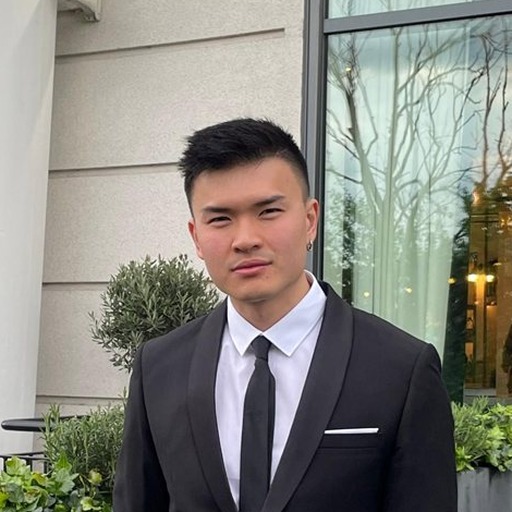
Dan Duar
Founder, Acclaira · Director, DNE Logistics
Dan founded Acclaira to help Malaysian SMEs get understood, trusted and recommended by AI search. He also runs DNE Logistics, a Port Klang freight and customs business, so he writes about digital growth from a business owner’s seat, not an agency’s.
Be the answer.
Get recommended by AI search.
Acclaira builds your premium website free, then does the AI SEO that gets your business named by ChatGPT, Perplexity and Google AI Overviews. From RM 3,000 a month, month-to-month with 30 days’ cancellation notice.