Industry · Acclaira Insights
How restaurants and cafés in Malaysia get recommended by AI search
In Malaysia, diners now ask ChatGPT and Google's AI where to eat, and get only a few names back. Here is why 83% of restaurants never appear, and how to be one that does.
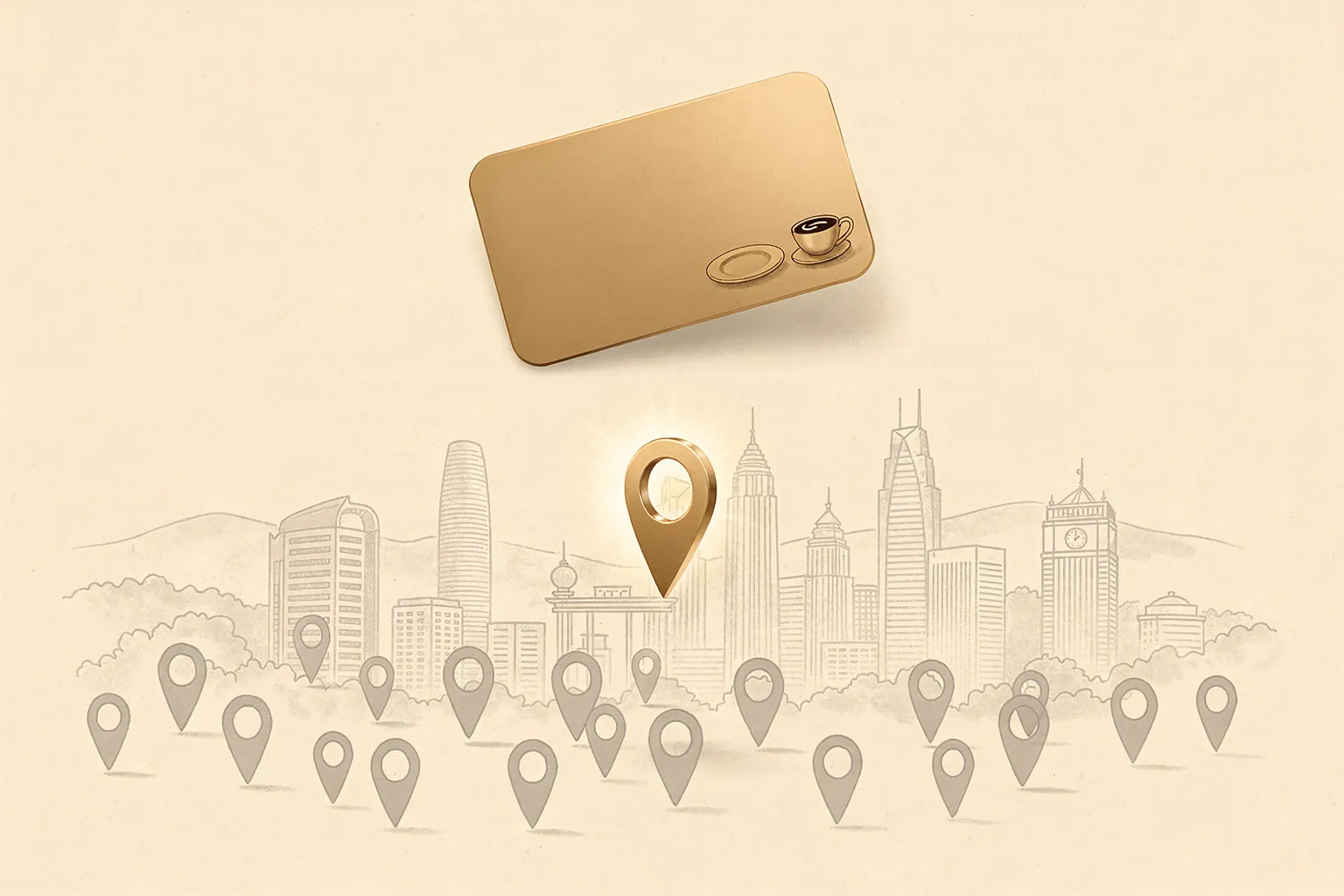
In Malaysia, a restaurant or café gets recommended by ChatGPT, Google's AI Overviews, Gemini and Perplexity when those engines find one consistent, well-reviewed and clearly structured picture of it across Google, review sites and its own website. AI hands the diner only two or three names per question, not a page of links, so the goal is not to rank on a list. The goal is to be one of the few names the assistant reads out.
Key takeaways
- Most restaurants are invisible to AI. In a 2026 benchmark, 83 percent of restaurant locations never appeared in an AI recommendation, even though 86 percent kept an active Google presence (Bloom Intelligence, 2026, citing Uberall's 2026 GEO benchmark).
- There is no page two. AI assistants name only three to five restaurants per question and stop, so a café is either in the answer or it is not found at all (Bloom Intelligence, 2026).
- Ratings are the first gate. ChatGPT mostly recommended restaurants rated 4.3 stars or higher, Perplexity about 4.1, and Gemini about 3.9 (Uberall 2026, via Bloom Intelligence).
- Recent reviews beat old ones. Forty reviews in sixty days can outweigh four hundred spread over five years, because AI reads a steady flow of recent reviews as proof a place is still good today (Birdeye, State of AI Search 2026).
- The Malaysian position is still open. Acclaira asked ChatGPT, Gemini and Claude sixteen Malaysian buying questions in June 2026 and found no business owned the answer in any category (Acclaira, Malaysia AI Visibility Index).
On this page11 sections
Why do diners in Malaysia now ask AI where to eat?
Because asking one assistant is faster than reading ten reviews, and Malaysians are among the most connected people in the world. Malaysia had 34.9 million internet users at the start of 2025, with online penetration at 97.7 percent (DataReportal, Digital 2025 Malaysia). More than 800 million people now use ChatGPT every week as of October 2025 (TechCrunch, October 2025), and Gartner expects traditional search volume to fall 25 percent by 2026 as buyers move to AI answers (Gartner, February 2024).
For a café owner this changes the whole game. A diner used to scroll a list of links and form their own view. Now the assistant reads the web for them and returns a short shortlist, and your restaurant is either on it or invisible. If you have never seen what AI says about your place, start with why your business may not show up in ChatGPT or Google AI.
Why are most restaurants invisible in AI search?
Because being on Google is no longer the same as being recommended by AI. In a 2026 benchmark, 83 percent of restaurant locations never appeared in an AI recommendation even though 86 percent maintained a Google presence, and only 17 percent were ever named (Bloom Intelligence, 2026, citing Uberall). The gap is not that these restaurants are bad. The gap is that the AI could not build enough confidence to name them.
"83% of restaurant locations never appear in AI-generated recommendations at all, even though 86% maintain a presence on Google." Bloom Intelligence, AI Restaurant Discovery 2026, citing Uberall's 2026 GEO benchmark
The reason invisibility hurts so much is scarcity. An AI assistant names only three to five restaurants per question and then stops (Bloom Intelligence, 2026). There is no page two to scroll to. For a Klang Valley café competing with dozens of others for "best brunch in Petaling Jaya", the shortlist is brutally short, and the businesses that make it are the ones the AI can describe with confidence.
What does AI check before recommending a restaurant?
An AI assistant recommends a restaurant when several independent signals agree on what it is, where it is, and how good it is. No single field decides it. The engine builds a composite picture from your reviews, your listings, public mentions and your own website, then names the places whose signals are consistent and current. Review and listing platforms alone account for more than 41 percent of the sources AI tools cite for local businesses (Yext citation study, via Bloom Intelligence).
The four signals that matter most for a Malaysian F&B business are these.
| Signal | What AI is checking | What to do |
|---|---|---|
| Consistency | Same name, address, phone and cuisine across Google, Facebook, Waze and your own site | Fix every listing so the details match exactly |
| Reviews | Volume, recency, and whether reviews name real dishes | Ask happy diners to review this week, and reply to each |
| Ratings | Whether your average clears the assistant's floor | Treat 4.3 stars as the working target, not 4.0 |
| Website | Whether a machine can read your menu, hours and location | Publish menu, hours and area as plain, structured text |
Reviews carry more weight than most owners expect, and recency matters as much as volume. Forty reviews earned in the last sixty days can outweigh four hundred spread over five years, because AI treats a steady flow of recent reviews as proof the place is still good today (Birdeye, State of AI Search 2026). A review that names the nasi lemak or the flat white is worth more than a generic "great food", because it gives the engine a specific attribute to match to a specific craving.
What star rating do I need before AI recommends my café?
Aim for 4.3 stars or higher, because that is roughly where the strongest assistant starts to trust a restaurant. A 2026 benchmark found ChatGPT mostly recommended restaurants rated 4.3 stars or higher, Perplexity around 4.1, and Gemini around 3.9 (Uberall 2026, via Bloom Intelligence). Ratings are the first gate an AI applies, and a café sitting at 3.8 stars is often filtered out before its other strengths are even read.
This does not mean chasing a perfect five. It means clearing the floor and staying above it with genuine, recent reviews. One honest caveat belongs here: these thresholds come from restaurant fieldwork abroad, not from a Malaysian study, so treat them as a well-evidenced guide rather than a local law. The direction is what matters, and the direction is clear. Get past twenty genuine reviews at 4.3 stars or better, then keep them coming.
Does my Google Business Profile decide whether AI recommends me?
To a large degree, yes, because your Google Business Profile is the structured record AI reads first to learn your cuisine, hours, location and rating. If the profile is incomplete, unclaimed or inconsistent with your other listings, the assistant cannot describe you with confidence, and confidence is what earns the recommendation. A complete profile with the right category, current hours, real photos and steady reviews is the single highest-return fix for most cafés.
Your profile also has to agree with everything else. If Google says you are in Bangsar and your Facebook page says Bangsar South, that small mismatch weakens the whole entity in the engine's eyes. For the full method on the profile itself, read does Google Business Profile matter for AI search in Malaysia.
What about menus, Malay and Manglish searches?
Malaysians search for food in English, Malay and a mix of both, and AI answers in the language of the question, so a café that only publishes English text misses a large slice of real demand. A diner might ask for "kedai kopi terbaik dekat Shah Alam" or "best cafe near KLCC", and the assistant looks for a business whose information supports both. Publishing your cuisine, signature dishes and area in clear language, rather than trapping them inside a photo of a menu, is what lets AI answer either question with your name.
Menus are where most F&B sites fail the machine. A menu saved as a JPG or a PDF is invisible to an AI model, which cannot read pixels. The fix is to publish the menu as real, structured text an engine can parse, ideally with menu and location markup. For how well AI actually copes across our languages, see can AI understand Malay, Mandarin and Manglish.
How do I make my restaurant website AI-readable?
Give the AI clean, structured text it can lift straight into an answer. That means a page an engine can read without guessing: your cuisine and area in plain words near the top, your menu as text rather than an image, your hours and address in a consistent format, and structured data markup so a machine can confirm what it is reading. The schema types that matter for F&B are Restaurant, Menu and LocalBusiness, plus an FAQ block for the questions diners actually ask (Bloom Intelligence, 2026).
Answer the real questions on the page itself. "Do you take walk-ins on weekends", "is there halal certification", "do you have vegetarian options" and "is there parking" are the questions a diner asks an assistant, and a café that answers them in plain text on its own site gives the AI something confident to repeat. This is the same discipline behind how to get your business recommended by ChatGPT, Gemini and Perplexity, applied to a menu instead of a service list. Before putting that work anywhere else, it is worth reading why a social profile is not something AI can attribute to you.
Is it too late, or is the position still open?
It is early, and the position is still open, which is the best news in this whole article. When Acclaira asked ChatGPT, Gemini and Claude sixteen real Malaysian buying questions in June 2026, no single business owned the answer in any category, and the most-cited source in any cluster appeared only about four times (Acclaira, Malaysia AI Visibility Index). Across local search generally, the share of consumers using AI for business recommendations rose to 45 percent in 2026, up from just 6 percent a year earlier (BrightLocal 2026, via Bloom Intelligence).
That combination of fast-rising demand and no incumbent is exactly the window a well-run café should move in. Want to see where you stand first? You can run the check yourself in five minutes with how to check if ChatGPT recommends your business. The playbook here mirrors what works for other local trades, such as how aircon and home-services businesses get found by AI, and again for clinics, law firms and accounting practices, where the trust signals look different. Food and beverage is only one of the twelve Klang Valley sectors we measured across 513 AI answers, and how open the position is differs sharply between them: the full picture is in AI visibility by industry in Malaysia.
How does Acclaira help restaurants and cafés get recommended by AI?
Acclaira makes your restaurant the one AI names. We check what ChatGPT, Gemini and Perplexity already say about your café, fix the review, listing and consistency gaps that keep you off the shortlist, then build and host a fast, AI-readable website with a structured, machine-readable menu, all as part of an ongoing AEO programme from RM 3,000 a month, month-to-month with 30 days’ cancellation notice, and you own your domain from day one.
The lowest-risk way to start is our free online AEO class, held every Thursday at 9.30pm Malaysia time, where you will learn the two-minute check and the first fixes to make. Message us on WhatsApp to join, or book a free 15-minute strategy call and we will show you what AI says about your restaurant today and the single highest-impact fix to change it. For the wider library, browse all Insights.
When a hungry diner asks AI where to eat near them, you want one name to come back, everywhere they look. Be the answer.
Sources
- Bloom Intelligence, "AI Restaurant Discovery 2026: The Data" (citing Uberall's 2026 GEO benchmark and a Yext citation study)
- Birdeye, "AI Search Recommendations for Restaurants" / State of AI Search 2026
- Sam Altman, OpenAI, 800 million weekly ChatGPT users (October 2025), via TechCrunch
- Gartner, "Search Engine Volume Will Drop 25% by 2026, Due to AI Chatbots and Other Virtual Agents" (February 2024)
- DataReportal, Digital 2025: Malaysia (internet penetration and users)
- Acclaira, Malaysia AI Visibility Index, June 2026 (first-party)
Frequently asked questions
How do restaurants get recommended by ChatGPT in Malaysia?
A restaurant gets recommended when ChatGPT finds a consistent, well-reviewed and clearly structured picture of it across Google, review sites and its own website. AI names only three to five places per question, so the aim is to be one of the few the assistant trusts enough to read out. In practice that comes down to accurate listings, recent reviews at a strong rating, and a website a machine can actually read.
What star rating do I need for AI to recommend my café?
Aim for 4.3 stars or higher. A 2026 benchmark found ChatGPT mostly recommended restaurants at 4.3 stars or above, Perplexity about 4.1, and Gemini about 3.9 (Bloom Intelligence, citing Uberall). Clear that floor with genuine, recent reviews rather than chasing a perfect five, because ratings are the first gate an AI applies.
Why does AI recommend my competitor and not me?
Usually because the competitor's signals are more consistent and current, not because their food is better. If your Google Business Profile, Facebook page and website disagree on your name, cuisine or hours, or your reviews have gone quiet, the AI cannot describe you with confidence and names the safer option instead.
Does my menu need to be text and not an image?
Yes. An AI model cannot read a menu saved as a photo or a PDF, because it cannot read pixels. Publish your menu as real, structured text with your dishes, prices and dietary options in plain words, so the assistant can match a diner's craving to your dish and name you.
Do reviews in Malay or Manglish help?
Yes. Malaysians ask AI in English, Malay and a mix of both, and reviews that name real dishes in any of these languages give the engine specific attributes to match. A review that mentions the nasi lemak or the kopi is worth more to an AI than a generic "great food".
About the author
Dan Duar
Founder, Acclaira · Director, DNE Logistics
Dan founded Acclaira to help Malaysian SMEs get understood, trusted and recommended by AI search. He also runs DNE Logistics, a Port Klang freight and customs business, so he writes about digital growth from a business owner’s seat, not an agency’s.
Be the answer.
Acclaira builds your premium website free, then does the AI SEO that gets your business named by ChatGPT, Perplexity and Google AI Overviews. RM 3,000 a month, month to month with 30 days’ cancellation notice.